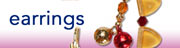
Say ooh (ooh), ahh (ahh)— these good luck earrings, revolve around the hamsa, an ancient Middle Eastern symbol used to keep evil spirits away and invite, among other things, happiness & health. Hamsa, translated as five, refers to the five fingers of the hand. The hands hang playfully atop red (a color traditionally used to ward off evil) and amber Mother-of-Pearl discs with red and amber beads and crystals gracefully dangling below.

Choose from all our styles

Hamsa Earrings-Whimsical 1

These whimsical hamsa earrings combine ancient and modern themes. The hamsa is an ancient Middle Eastern symbol used to keep evil spirits away and invite, among other things, happiness, and health. Hamsa (Arabic) or Hamesh (Hebrew) is translated as five, referring to the five fingers on the hand. The hands hangs playfully atop red and amber colored Mother of Pearl discs while red and amber beads and crystals dangle delicately below.The color red, traditionally, has also been used in jewelry, ribbons and strings to ward off evil.

paypal

Hamsa Earrings - Traditional 1

These traditional hamsa earrings combine ancient and modern themes. The hamsa is an ancient Middle Eastern symbol used to keep evil spirits away and invite, among other things, happiness, and health. Hamsa (Arabic) or Hamesh (Hebrew) is translated as five, referring to the five fingers on the hand. The hands hangs playfully atop red and amber colored Mother of Pearl discs while red and amber beads and crystals dangle delicately below.The color red, traditionally, has also been used in jewelry, ribbons and strings to ward off evil.

paypal


chozzerai of the week

“OMG, how cute are these?

Shabbat earrings—could you die over the little candlesticks? I’m more into the tribal bone look myself, but I seriously love these from Yontifications.com, a line of Holy Day-inspired jewelry designed by Judaica superstar Susan Fischer Weis.

Really, you need to check out the whole year—the adorable little shofar for Rosh Hashanah had me squealing like someone put baby bunnies in my sock drawer. And Sukkot’s baby lulav and etrog— lady, you’re killing me! The mini-matzohs and teeny hamantashen are so freakin’ precious I want to become a Hebrew school teacher so I could have an appreciative audience for them.”

—Yo, Yenta!